Monday, November 8, 2010

Thursday, September 23, 2010
The Seventh Seal (1957)

What a fantastic, evocativ
e film. While I had certain issues with the narrative, this was
visually breathtaking. And it provided a very stimulating meditation on death, the meaning of life and the political uses of religion.
The modernist sentiment is summarized well by the Knight (who has returned home from the Crusades) as he plays chess with Death:
My lifehas been a futile pursuit, a wandering, a great deal of talk without meaning. I feel no bitterness or self-reproach because the lives of most people are very much like this. But I will use my reprieve for one meaningful deed.

The context is medieval Europe and the Black Plague -as well as the Inquisition. All very appropriate subject matter for this modern expression of alienation, existential philosophizing. It's cynical when it comes to religion - but shouldn't it? And it draws on appropriate, apocalyptic imagery from the Book of Revelations. It's appropriate because that book is fucking scary, man!! But the scary revelation here
derives not from angels blowing the trumpets of the Last Judgment nor is it from (say) the Four Horseman of the Apocalypse (although obviously Death does play a major role here); rather the scary revelation the film represents is Nietzschean: the idea that god is dead. That god exists is a fiction we use to avoid reality.

Max von Sydow is stunning here. He adds charisma and magnetism to the role. There is a nobility and dignity to his performance of the Knight. I can barely believe that from this rather high brow film he would go on to star in other, very much low brow films: most notably Ming the Merciless from Mike Hodges Flash Gordon (1980) film. The latter, however, is alot of fun, even if it is uber-camp. EIther way, he is stunning.
**** stars fro me.
Tuesday, August 31, 2010
Blair's Rhetoric
War and politics; war as politics; the rhetoric of war. The wisdom of the decision to go to Iraq remains questioned by many. Many innocent Iraqis have been destroyed in the effort to overthrow Saddam's regime - as well as many American and coalition troops. And while the dictator is now gone, we are left with the aftermath... which again begs questions regarding the wisdom of sticking our noses in. 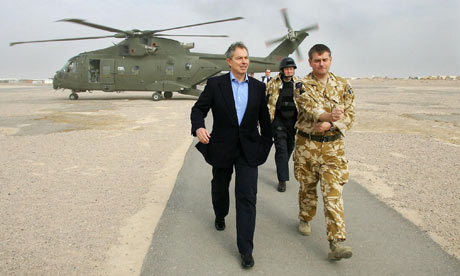
Blair however attempts to justify his decision to support the Bush administration in a recent Guardian interview. The interview reveals that he was in a difficult position when asked point blank to admit whether or not going to Irag was a mistake:
He writes of his anger when Sir John Chilcot concluded the session by asking: "Do you have any regrets?"
Blair writes: "It was a headline question. It had to have a headline answer. Answer 'yes' and I knew the outcome: 'Blair apologises for war', 'at last he says sorry'. Choose a variant. The impact would be the same.
"Those who had opposed the war would rejoice; those who had supported it would be dismayed, imagining their support and in some cases their sacrifice had been in vain. Answer 'no' and you seem like some callous brute, indifferent to the suffering or perhaps worse, stubbornly resistant, not because of strength but because you know nothing else to do."
The interview ends by stating:
Blair admits that the intelligence that Saddam possessed a WMD programme "turned out to be incorrect".
Despite admitting this error, he says the invasion was still the correct course of action by citing a 2004 report by the weapons inspector Charles Duelfer. This included interviews with senior figures in Saddam's regime and an interview with the ex-Iraqi president conducted by an FBI agent, George Piro. The report uncovered tapes of meetings between Saddam and senior staff at which the WMD programme was discussed. Blair writes that Saddam made a "tactical decision to put such a programme into abeyance, not a strategic decision to abandon it". (See: http://www.guardian.co.uk/politics/2010/aug/31/tony-blair-iraq-nightmare#send-share-box.)
Subscribe to:
Posts (Atom)